
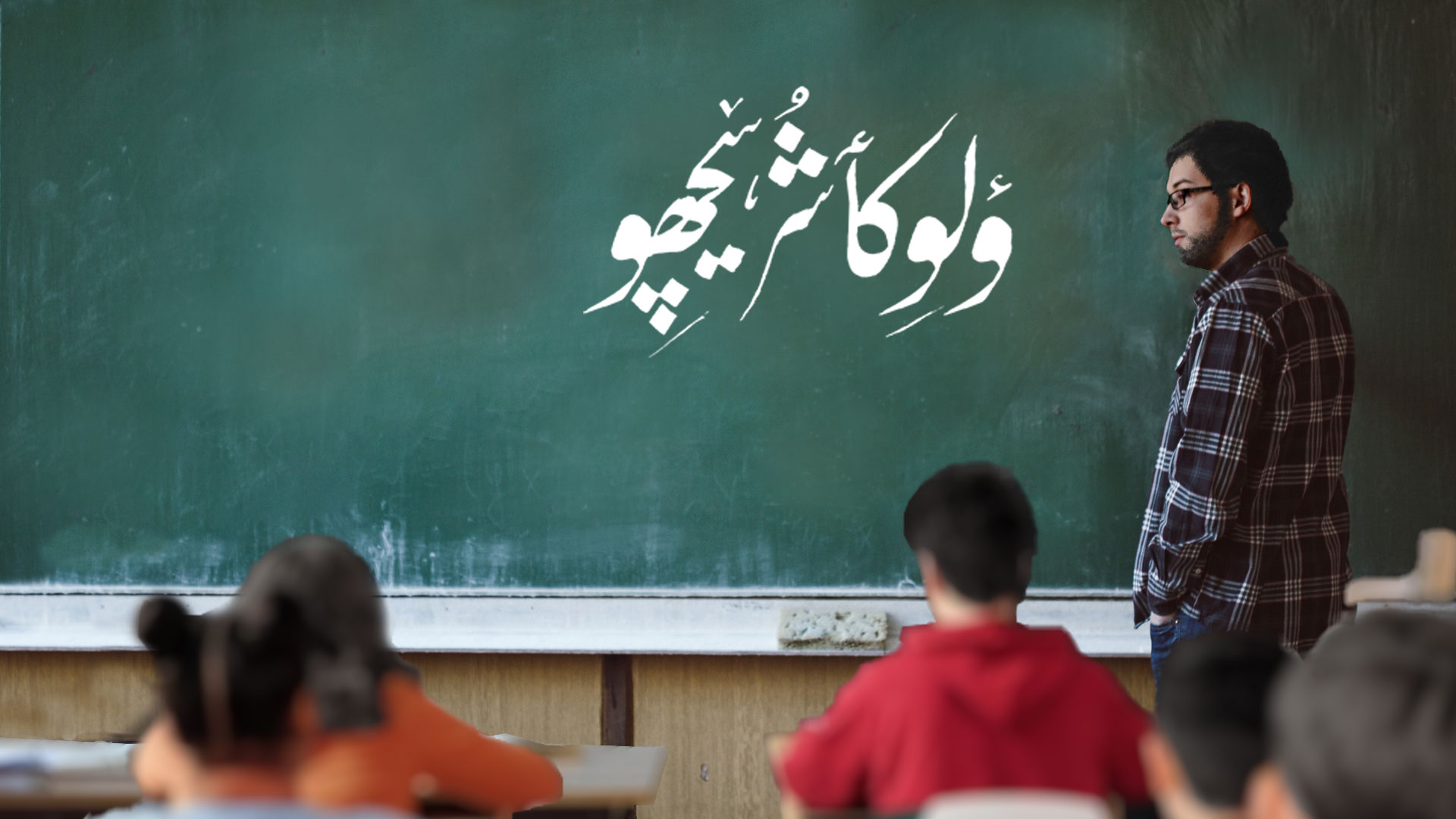
 In Kashmir, language is not just a means of communication. It includes family traditions, humour, generations of poets and poetic tradition, the voice of the land that has always been a talking one. But times are changing. More and more, a child who understands Kashmiri well will answer in Urdu or English. The parents of that generation of children speak Kashmiri, but prefer to communicate with their kids in English, as they believe this will give them an edge.
Is Kashmiri disappearing? Not exactly. But it may be losing the space it once held in the daily lives of younger Kashmiris.
For many educators and writers, this is not about choosing one language over another. Kashmir has always been multilingual. The real question is whether learning new languages is quietly displacing the mother tongue.
Muneer, an educator known for his work through Muneer Speaks, argues that language learning starts at home and is greatly influenced by the environment of the child. According to him, after a child has joined English medium schools, the parents generally start speaking English or Urdu at home in order to make the child more comfortable; but in the long run, this may deprive the child of Kashmiri language.
He believes children should learn Kashmiri from an early age, regardless of the other languages they eventually learn. A strong foundation in the mother tongue, he says, can also strengthen comprehension and help children develop their ability to learn other languages.
In his view, Kashmiri is not disappearing, but it is receding.
This is not because of mere resentment towards English and Urdu. As explained by Muneer, one of the main reasons is the inferiority complex that exists with regard to Kashmiri language. English is considered sophisticated and linked with education and better opportunities in certain social settings while Kashmiri is regarded as rustic and traditional in nature. Kashmir’s increasing exposure to the outer world through work and migration has also played its part.
There is also a practical question that many young people may ask: what can Kashmiri offer me professionally?
English dominates global education, technology and employment and has a vast digital ecosystem. Kashmiri has a much smaller professional and technological footprint, with fewer software tools, applications and commercial opportunities built around the language. This can make it difficult for young people to see an immediate practical reason to invest time in learning it seriously.
Yet Muneer does not see the younger generation as having turned its back on Kashmiri.
He refers to the increasing popularity of Kashmiri music, literature, and culture. Youth are enjoying the songs in Kashmiri, learning about the contemporary artists like Sufiyan, and accessing Kashmiri stuff on the Internet. In his view, it means that young Kashmiris do not reject the language; rather, they only need the language in forms relevant to their lives.
The same, he believes, applies to literature. Kashmiri books have the potential to compete at the highest level and even win major literary awards. What is needed is literature that speaks to contemporary readers and demonstrates that Kashmiri can carry modern ideas, experiences and debates just as effectively as any other language.
Professor Shad, a retired professor and former Head of the Department of Kashmiri at the University of Kashmir, who currently serves as Convenor of the Kashmir Chapter of Sahitya Akademi, New Delhi, and as a Distinguished Professor at the Central University of Kashmir, takes a more reassuring view of the language’s future.
He does not believe Kashmiri is in immediate danger. Kashmiri continues to be widely spoken, and dedicated departments of the language exist in universities across Jammu and Kashmir. For him, the deeper concern is not that the language is dying, but that a proper and consistent system for connecting younger generations with it is still lacking.
A language that remains part of everyday life, he argues, does not simply vanish. However, young people need meaningful opportunities to understand its value and possibilities.
He also points to a kind of linguistic hesitation among some young people, who may choose Urdu or English because of a fear or discomfort associated with speaking Kashmiri in certain settings. He believes stronger associations and initiatives are needed to help young people understand the benefits of the language and engage with its literary tradition.
His advice to those who are interested in Kashmiri is simple: read Kashmiri literature, understand it and engage with it directly.
The issue becomes particularly visible in educational institutions.
As per Dr Abid who is a professor at a government college, the change usually starts with the decisions made by the parents. Since the children join English medium schools, the parents usually start speaking English and sometimes Urdu in order to help the children get used to the language spoken in class. Over time, the Kashmiri language is no longer used in daily conversation.
He believes the education system could play a stronger role in reversing this trend. One suggestion is to make Kashmiri a compulsory subject from Classes 8 to 12, rather than allowing students to stop studying it at an earlier stage.
He has observed college students who do not opt for Kashmiri because they stopped studying it after Class 8 and subsequently lost familiarity with the subject. He also points to the inferiority complex that some young people associate with speaking Kashmiri.
But perhaps the clearest picture comes from young Kashmiris themselves.
For many students, English is closely connected with higher education, technology and career opportunities. Urdu remains important in religion, education and literature. Kashmiri, meanwhile, continues to be the language of home and identity for many, but it does not always occupy the same space in academic or professional life.
That does not necessarily mean young people want to abandon it.
A student who speaks English in the classroom, Urdu in certain social or religious settings and Kashmiri at home is not linguistically confused. They are multilingual. In fact, the ability to move between languages can be an advantage. The challenge is ensuring that Kashmiri remains part of that linguistic mix.
Knowing Kashmiri is about more than being able to speak with grandparents. It provides access to traditional expressions, folk stories, poetry, humour and cultural references that can lose some of their meaning when translated into another language.
The answer, therefore, is not to ask young people to stop learning English or Urdu. It is to make Kashmiri equally compatible with the modern world.
The language needs contemporary books, children’s literature, digital content, music, films, podcasts and educational resources. It needs writers who are willing to discuss modern subjects in Kashmiri and readers who are willing to engage with them. It also needs technology that makes the language easier to read, write and use in everyday digital life.
Above all, it needs to remain alive inside homes.
Languages rarely disappear suddenly. They become weaker when one generation stops passing them naturally to the next. Preservation can therefore begin with something as simple as parents speaking Kashmiri with their children, children reading Kashmiri, students studying it and young writers giving the language new stories to tell.
Kashmiri does not need to compete with English, Urdu or any other language. It simply needs to retain its place alongside them.
Fluency in English does not make a Kashmiri less Kashmiri, and speaking Kashmiri does not make a young person less modern. A multilingual Kashmir can embrace the opportunities offered by other languages while still protecting the language that carries its own memories, humour, literature and cultural identity.
The future of Kashmiri may ultimately depend less on whether young Kashmiris know English or Urdu, and more on whether they continue to feel that their mother tongue deserves to be heard
Email: firdousjavid1@gmail.com


