October 1947 remains one of the most significant and painful chapters in the history of Jammu and Kashmir. As the region marks 78 years since the tribal invasion backed by Pakistan, the occasion offers an opportunity to remember the suffering of ordinary people, reflect on the events that changed the course of history, and consider the importance of peace, stability and development in the years ahead.On 22 October 1947, armed tribal raiders, supported by elements from Pakistan, entered Jammu and Kashmir from the western side. The invasion came at a time when the princely state was facing uncertainty following the Partition of British India. The violence that followed brought immense suffering to civilians and threatened the security of the state. Towns and villages were affected, families were displaced, and many people lost their lives amid the turmoil.Baramulla became one of the most tragic symbols of this invasion. The violence and destruction witnessed there left a lasting mark on the collective memory of Kashmir. The accounts of that period speak of fear, loss and the disruption of ordinary life. For the people who experienced those days, the events were not simply a political or military episode; they were a human tragedy that affected families, communities and generations.
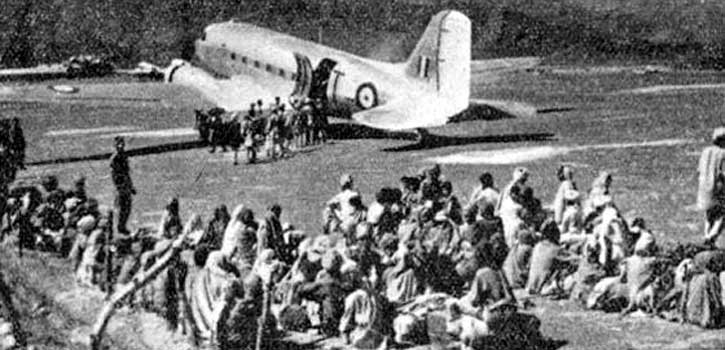
The invasion also played a decisive role in the political future of Jammu and Kashmir. Facing the advancing raiders, Maharaja Hari Singh signed the Instrument of Accession to India on 26 October 1947, and India accepted it on 27 October. Indian troops were subsequently airlifted to Srinagar to help defend the state against the advancing forces. These developments marked a turning point in the history of the region and laid the foundation for a conflict whose consequences continue to be felt today.However, remembering 1947 should not mean limiting the discussion to political arguments alone. History is also about the lives of ordinary people, the communities that endured violence and the families whose experiences were passed down through generations. Their stories deserve to be documented and understood with honesty. The suffering of civilians, regardless of their background, should never be overlooked when examining the past.Seventy-eight years later, Jammu and Kashmir has witnessed enormous changes. Roads, educational institutions, healthcare facilities, communication networks and other forms of infrastructure have expanded in many areas. Young people today have greater access to education, information and opportunities than previous generations. At the same time, the region continues to face challenges related to employment, social stability, tourism and the lasting effects of conflict.
The anniversary is therefore not only an occasion to remember the past but also an opportunity to ask what kind of future Kashmir deserves. The people of the region need peace, economic opportunity, quality education and an environment in which young people can pursue their ambitions without fear or uncertainty. Historical memories should encourage society to value stability and protect the lives and dignity of every citizen.It is equally important that history be studied through credible records, eyewitness accounts and responsible scholarship. Political differences should not prevent people from acknowledging established facts or understanding the human consequences of violence. A mature society does not erase difficult chapters from its history; it learns from them. Remembering the invasion of October 1947 should encourage a deeper understanding of the dangers of armed conflict and the importance of protecting civilian life.For Kashmir’s younger generation, the events of 1947 may appear distant, but their consequences remain relevant. Understanding this history helps explain why peace and stability matter so deeply to the region. It also reminds young people that the future cannot be built on inherited hostility alone. Education, dialogue, democratic participation and economic development are essential to creating a society in which historical pain does not determine every future possibility.
As Jammu and Kashmir marks 78 years since the invasion, the responsibility is to remember the victims, preserve historical memory and remain committed to a peaceful and prosperous future. The past cannot be changed, but the lessons drawn from it can influence the choices made today.The story of Kashmir is not defined by one invasion or one conflict. It is also a story of resilience, cultural richness and the enduring hopes of its people. Honouring that legacy means remembering the events of 1947 honestly while working towards a future in which peace, dignity and opportunity become the shared aspirations of every generation.